
Faith, Freedom, and Feeding: Why Guardianship Is a Protected Spiritual Practice
- Guardians of the Cats
- Oct 25, 2025
- 6 min read
Updated: Feb 26

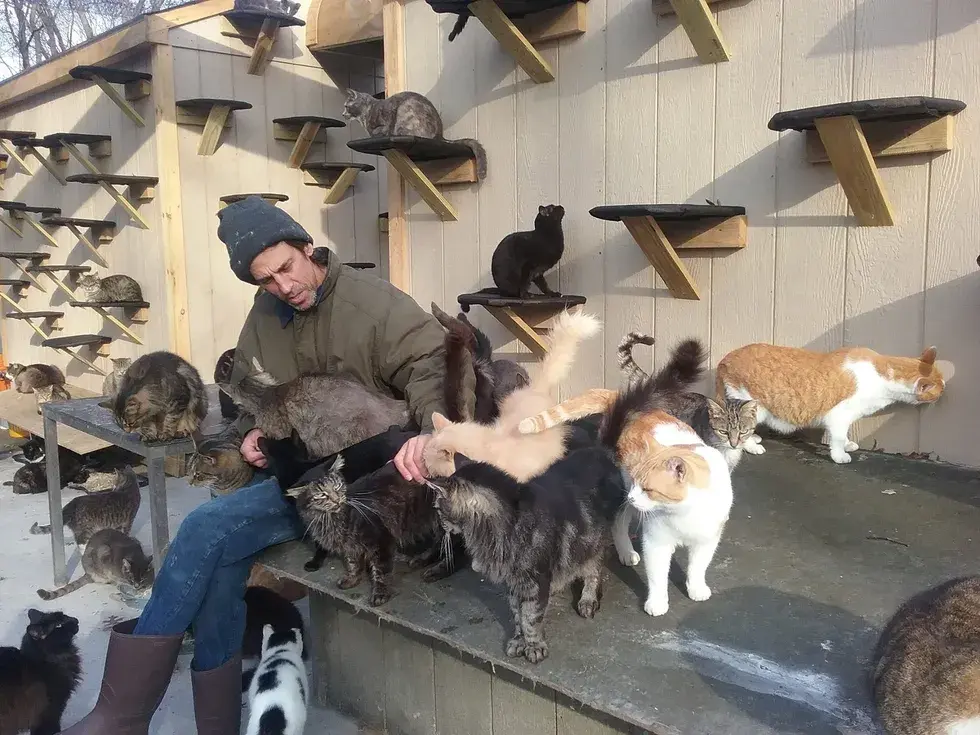
Every day, across the country, compassionate souls set down bowls of food for homeless cats. They build simple shelters, offer water in the heat and the cold, and quietly speak to those who trust no one else.
And yet, many of them are:
Fined or warned
Told to stop feeding
Made to feel like they’re doing something wrong
At Guardians of the Cats, we see this differently.
For us, this is not just kindness. It is faith in action.
Feeding, protecting, and blessing the forgotten ones are sacred expressions of a spiritual calling. And while laws can be complex and vary from place to place, the First Amendment’s protection of spiritual and religious exercise is one important piece of the larger picture.
This article offers a spiritual framework and general education about how faith and freedom intersect with your caregiving.
Important note: This is not legal advice. For specific questions about your rights, always consider speaking with a local attorney, fair-housing group, or legal aid organization.
The Spiritual Foundation of Guardianship
Guardians of the Cats is a faith-based, non-denominational 501(c)(3) ministry rooted in a simple, profound truth:
Every cat is a sacred life—worthy of dignity, nourishment, and love.
For many Commissioned Guardians, caring for these cats is not:
A hobby
A casual act of charity
Something they could simply “turn off” if asked
It is a spiritual practice, woven into how they relate to Spirit, the Divine, or Love itself.
When a Guardian:
Sets out food for a hungry cat
Builds a small shelter against wind or rain
Offers gentle presence to a terrified animal
…they are not just “doing a good deed.” They are engaging in what, for them, is a living prayer—a way of honoring life where the world has cast it aside.
This is what we mean when we say Guardianship is a spiritual practice.
How the First Amendment Fits In (In Plain Language)
The First Amendment to the United States Constitution protects, among other things, the free exercise of religion and spiritual belief. Courts have repeatedly affirmed that:
Protection is not limited to large or historic religions
Sincerity of belief matters more than popularity or tradition
Spiritual and religious exercise can take many forms
For Guardians, that means:
Your care for homeless cats can be understood as part of your sincerely held spiritual practice
Your beliefs and practices do not have to look like conventional worship to be treated seriously
However, it’s important to understand this in a realistic way:
The First Amendment does not mean “no one can ever restrict anything you do.”
Governments and housing providers may still regulate certain activities, especially when they raise health, safety, or property concerns.
The law often looks for balance between individual spiritual practice and broader community needs.
Our role as a ministry is to help you speak clearly about your caregiving as a spiritual practice—and to encourage officials, landlords, and HOAs to seek reasonable, less restrictive solutions instead of jumping straight to bans or punishments.
What “Less Restrictive” Really Means
In many legal frameworks that touch on religious or spiritual exercise, decision-makers are encouraged to ask:
Is there a real, compelling reason to restrict this practice?
Is there a less restrictive way to address concerns rather than banning it entirely?
In everyday Guardian life, “less restrictive” often looks like:
Clean feeding stations instead of “no feeding at all”
Specific times and locations for feeding instead of “never, anywhere”
Reasonable guidelines (sanitation, limiting food left out) instead of immediate fines or eviction threats
For example:
If a city is worried about mess or wildlife, a less restrictive option might be to require tidy, managed feeding and regular cleanup.
If a landlord is concerned about property damage, they might agree to feeding in one specific area and regular litter management instead of banning all outdoor care.
If neighbors don’t like seeing bowls everywhere, the solution may be more discreet setups and consistent cleanup—not criminalizing compassion.
The heart of the idea is this:
When possible, solutions should respect both your calling and legitimate community concerns, instead of forcing you to betray your conscience.
Where RLUIPA and Other Protections May Come In
The Religious Land Use and Institutionalized Persons Act (RLUIPA) is a federal law that, in certain contexts, offers additional protections for religious exercise affected by land use and zoning decisions.
In broad terms, questions may arise under laws like RLUIPA when:
A city or zoning authority heavily restricts what you can do on your own property as part of your faith-based practice
An HOA, landlord, or local rule severely limits how you can exercise your spirituality in the place where you live
Structures or spaces used for spiritual practice (including simple shelters or feeding areas) are targeted in ways that may disproportionately burden faith-based activity
For individual Guardians, these issues can be legally complex and fact-specific. Not every conflict will fall under RLUIPA. That’s why we always recommend:
Starting with education, cooperation, and written communication
Keeping areas as clean and orderly as possible
Seeking advice from local legal or fair-housing professionals if things escalate
Our focus as a ministry is to ensure your spiritual perspective is expressed clearly and respectfully, so if you do seek legal help, you’ve already named what you do as a faith-based practice rather than “just feeding cats.”
Guardianship as a Living Ministry
When a Guardian takes an oath or makes an inner commitment to this work, they are stepping into a living ministry of compassion.
That ministry may look like:
Setting out food quietly before sunrise
Checking on a colony after work, even when exhausted
Trapping, transporting, and caring for cats who’ve never known gentleness
Sitting with a sick or injured cat so it doesn’t leave this world alone
None of these acts happen in a church or temple. And yet, in spirit, they are acts of devotion:
A way of saying, “I will not abandon you.”
A way of honoring the sacredness of lives others treat as disposable.
A way of living out faith through action, not just words.
This is why Guardianship is more than animal care. It is a spiritual path.
How Guardians of the Cats Helps Protect and Support You
Our mission is not only to bless the cats—it is to support those who protect them.
While we cannot serve as your lawyers or guarantee specific legal outcomes, we can offer:
1. Faith-Based Letters and Documentation
We provide template letters and ministry documentation that:
Identify you as a Commissioned Guardian in a faith-based, non-denominational ministry
Explain that your caregiving is part of your sincere spiritual practice
Emphasize your commitment to responsibility, cleanliness, and cooperation
Request reasonable, less restrictive approaches instead of outright bans or punishments
You can use these letters with:
Landlords and property managers
HOAs and neighborhood associations
City officials, animal control, or other authorities
2. Education and Advocacy
We create resources that help:
City officials understand that managed, humane care is often better for public health than neglect or indiscriminate removal
HOAs and landlords see that there are middle paths (clean feeding, limited times/locations, sterilization efforts) instead of total prohibition
Guardians themselves speak about their work in faith-based language that is clear, calm, and grounded
3. Incident Documentation Support
When harassment, threats, or citations occur, we encourage Guardians to:
Document dates, times, notices, and conversations (our incident report template can help)
Keep copies of letters, warnings, or tickets
Avoid heated arguments and instead respond in writing once they are calmer
This documentation is valuable both spiritually (for clarity and self-respect) and practically (if you consult with outside legal or housing advocates).
4. Spiritual and Emotional Support
Finally—and just as importantly—we offer:
Blessing circles and guided intentions for you and the cats in your care
Community and fellowship with other Guardians who understand this path
Encouragement when you are made to feel like your compassion is a “problem” to be solved instead of a gift to the world
You are not meant to carry this calling alone.
If You Are Fined, Threatened, or Told to Stop
If you find yourself in conflict over feeding or caring for cats:
Stay as calm as you can. You don’t need to argue legal points on the sidewalk. You can say,
“I understand you have concerns. I’m part of a faith-based ministry called Guardians of the Cats, and caring for these cats is part of my spiritual practice. I’ll follow up in writing.”
Document what happened.Note the date, time, who spoke to you, what was said, and any witnesses. Keep copies of notices or tickets.
Keep your area as clean and discreet as possible.This strengthens your position both spiritually and practically.
Use letters, not shouting matches.Choose the appropriate template from your Guardian resources and respond in writing, explaining your spiritual practice and asking for a balanced, less restrictive approach.
Seek local help if necessary.If things escalate, consider reaching out to local legal aid, fair-housing groups, or attorneys who understand housing and civil rights law in your area.
Compassion Is Not a Crime
To the outside world, it may look like you’re “just feeding cats.”
But to us—and, we believe, to Spirit—you are:
Feeding hope
Witnessing to the value of lives most people ignore
Living out a quiet, stubborn form of faith
Every act of care is a kind of prayer. Every life sheltered is a blessing released into the world.
Guardianship is not about winning every legal battle or never being challenged. It is about staying true to the love that called you, even as you navigate rules, regulations, and human misunderstandings with as much wisdom and grace as you can.
Compassion is not a crime. It is a sacred duty.
And Guardians of the Cats exists to help you keep that duty honored, protected where possible, and never forgotten.


Comments