
When a Sanctuary Is Targeted: Why We Built Guardians of the Cats as a Faith-Based Ministry
- Guardians of the Cats
- Mar 6
- 5 min read
A reflection inspired by the story of Happy Cat Sanctuary and Chris Arsenault
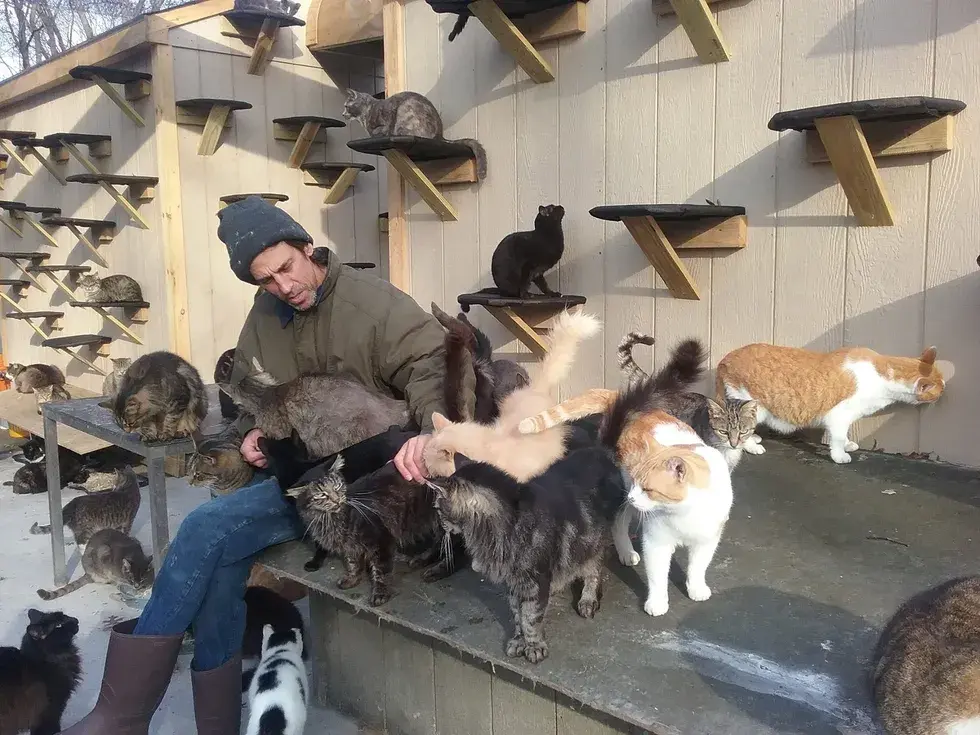
There are people who rescue cats.
And then there are people who build entire lives around protecting them.
They open their homes. They sacrifice sleep, money, peace, and comfort. They carry the weight of hundreds of lives—each one vulnerable, each one depending on human mercy to survive.
Chris Arsenault, founder of Happy Cats Sanctuary on Long Island, was one of those people.
He devoted his life to cats who had nowhere else to go. He created refuge where suffering had been normal. He gave the forgotten a place to be seen, safe, and fed.
And yet, despite the compassion behind his work, he endured something many sanctuaries know too well:
Relentless harassment.
Complaints. Pressure. Scrutiny. Opposition. Neighbors who misunderstood. Officials who reduced sacred care to “a problem. ”A constant feeling of being pushed, watched, and threatened for doing what love required.
Tragically, Chris later lost his life in a fire—along with hundreds of cats. And while no organization can rewrite such a devastating outcome, his story remains a solemn reminder of something we must face honestly:
Sanctuaries are often forced to fight simply to exist.
Happy Cats Sanctuary's story is one of the reasons we created Guardians of the Cats—and why we built it as a faith-based ministry from the beginning.
Why We Framed Guardians of the Cats as Faith-Based
We did not choose “faith-based” language to sound poetic.
We chose it because it is true—and because it provides leverage and protection in a world that often treats cat caregivers as disposable.
In many faith traditions, compassion is expressed through practical mercy—feeding the hungry, clothing the poor, building shelters, operating soup kitchens, and creating outreach programs that restore dignity to lives the world overlooks. These are not side projects of faith. They are faith in motion.
Guardians of the Cats follows that same spiritual practice—only the “least among us” we serve are the cats living on the margins of human awareness. Sanctuaries become mercy centers. Feeding stations become outreach. TNR becomes responsible stewardship. And the message is the same:
You are seen. You are safe. You matter.
For many sanctuaries and caretakers, this is not casual volunteering. It is not a hobby. It is not a trend.
It is soul work.
It is a calling—an inner knowing—placed on the heart to serve the forgotten and the least among us. The cats no one claims. The ones society overlooks. The ones who suffer quietly beyond the edges of human comfort.
At Guardians of the Cats, we recognize what so many caregivers already know in their bones:
This work is spiritual.
Every bowl filled is an act of mercy. Every life protected is love made visible. Every sanctuary built is sacred ground.
And because this work is spiritual, we believe it deserves to be recognized as such—not only in the heart, but also in the public realm.
When a caregiver is harassed, the issue is not “cats. ”The issue is often someone trying to stop a spiritual practice of compassion.
Framing Guardianship as faith-based gives sanctuaries and rescuers a stronger foundation to say:
“This is not chaos. This is not nuisance. This is a sincere practice of sacred stewardship.”
That clarity matters—especially when a city, HOA, or neighbor is pushing for shutdown, removal, or restriction.
Why Sanctuaries Get Harassed (Even When They’re Doing Good)
If you run a sanctuary or rescue, you know the pattern:
“Too many cats.”
“It’s a nuisance.”
“It lowers property values.”
“It’s unsanitary.”
“It’s not allowed.”
“The city says you have to stop.”
Sometimes complaints come from real concerns. Often, they come from misunderstanding, fear, or intolerance toward the work itself.
Either way, sanctuaries can get pulled into a cycle where they are constantly forced to defend their right to protect life.
What Affiliation With Guardians of the Cats Is (and Isn’t)
Let’s be clear:
Affiliation is not a magic shield. It is not legal representation. It does not guarantee outcomes.
But affiliation does create something sanctuaries often lack when pressure starts:
A documented spiritual framework that says:
“This sanctuary is ministry-aligned, responsible, and intentional.”
When you are affiliated with Guardians of the Cats, your sanctuary/rescue is formally recognized as a ministry grounded in sacred stewardship, supported by clear standards and agreements.
This gives you stronger footing when communicating with:
neighbors
HOA boards
landlords/property managers
city officials and code enforcement
zoning boards
community members spreading misinformation
How Affiliation Could Have Helped in a Chris-Type Situation
We cannot claim what would have happened if Chris had been affiliated with Guardians of the Cats. Only the facts of history remain.
But we can say this:
In situations like his—where a sanctuary is repeatedly challenged—affiliation can strengthen a sanctuary’s position by providing:
1) Credibility and clarity from the beginning
Harassment escalates faster when sanctuaries are framed as “unregulated” or “out of control.”
Affiliation helps establish a clear identity:
a Certificate of Affiliated Ministry
a Statement of Sacred Stewardship (signed and on file)
agreement to the Stewardship Covenant
agreement to the Integrity & Right Use Agreement
and a consistent message about what your sanctuary is and why it exists
This can shift the conversation from accusation to structure—from “problem” to “purpose.”
2) A calm, authoritative framework that de-escalates conflict
Many sanctuaries are forced into reactive mode—responding to threats and complaints without unified language.
Affiliation provides a grounded way to communicate:
“We operate with responsibility.”
“We follow stewardship standards.”
“We seek humane coexistence.”
“We are willing to implement practical solutions.”
And importantly:
We will not be intimidated into abandoning lives.
Not in anger. Not in chaos. But in calm spiritual authority.
3) More leverage when land-use pressure is involved
Many sanctuary conflicts escalate through land-use enforcement: zoning, permits, inspections, nuisance claims, property use disputes.
In those contexts, it can be powerful to document that sanctuary work is part of a sincerely held spiritual practice of stewardship. In certain land-use situations, federal protections such as RLUIPA may be relevant because they require governments to avoid placing substantial burdens on religious exercise without meeting strict standards.
Affiliation does not create legal protection by itself—but it can strengthen a sanctuary’s ability to demonstrate:
sincerity
consistency
ministry-based purpose
responsible standards
willingness to mitigate rather than fight
And that often leads to a better question from officials:
“How do we address concerns without destroying the sanctuary?”
That is what “least restrictive solutions” looks like in practice: solutions over shutdown.
Why Guardians of the Cats Exists
We built this ministry because sanctuaries and rescuers should not have to suffer in silence.
We built it so that when complaints start, you are not scrambling to find the right words, the right tone, the right framework.
We built it to affirm what caregivers already know:
This is sacred work.
Not because it is easy. But because it is mercy. And mercy, when lived, becomes holy.
If You’re Facing Harassment Now
If you’re a sanctuary or rescue dealing with pressure—neighbors, city officials, zoning threats, or constant scrutiny—affiliation may give you a stronger foundation to respond with clarity and calm authority.
Not to escalate. Not to threaten. But to establish your work as legitimate, intentional, and spiritually rooted.
You should never have to choose between your calling and your safety.
And the cats should never become collateral damage in someone else’s discomfort.
Become an Affiliated Sanctuary/Rescue Ministry
Affiliation includes:
Certificate of Affiliated Ministry
Statement of Sacred Stewardship (signed and on file)
Stewardship Covenant + Integrity & Right Use Agreement
Access to ministry resources and templates
Fellowship with Guardians nationwide
A closing reflection for Chris and the cats he served
Some lives are so devoted to mercy that the world does not know how to hold them. But we do.
And we will keep building what protects them—in love, in stewardship, and in sacred service.


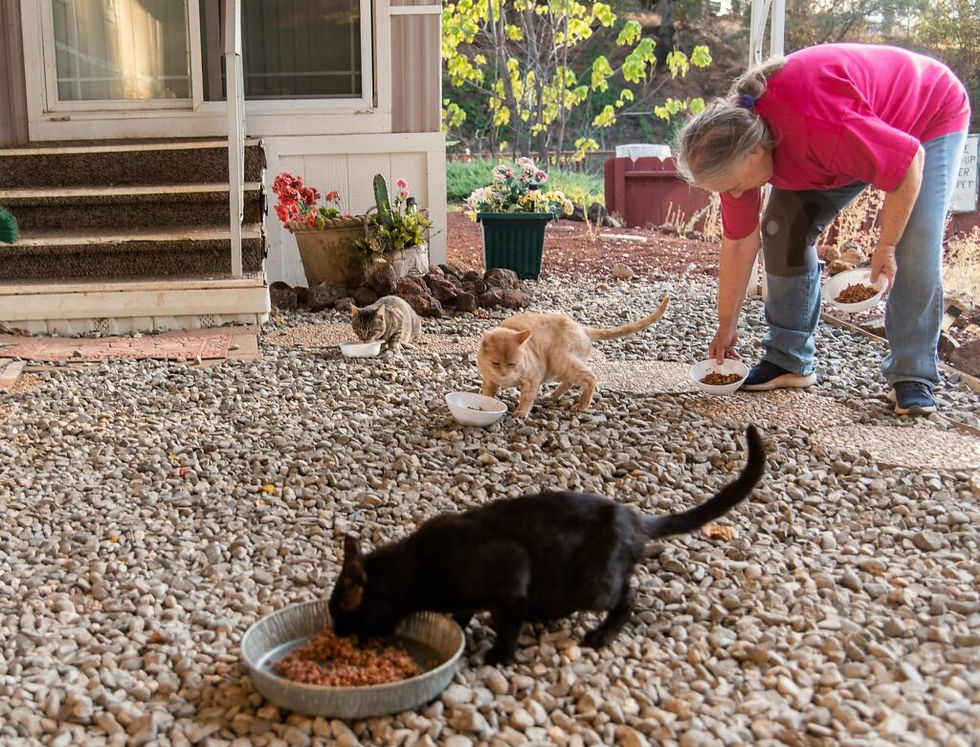
I’ve long felt that God's lovingly graceful and artistic side definitely went into the feline creation. Meanwhile, many, if not most, non-cat-fans don’t care for the innate resistance by cats to heeling at their masters’ command. And their reptile-like vertical-slit pupils and Hollywood-cliché scream or fanged hiss when confronted, in a world mostly hostile toward snakes, cause cats to have a seemingly permanent PR problem, despite their Internet adorable-pet dominance.
.
Human apathy, the throwaway mentality/culture and even a bit of public hostility toward them often-enough result in feral and homeless cat population explosions thus their inevitable neglect and suffering, including severe illness and starvation. With the mindset of feline disposability, it might be: ‘Oh, there’s a lot more whence they…