
Feeding Cats in Apartments & Mobile Home Communities: A Faith-Based Guide for Guardians
- Guardians of the Cats
- Oct 25, 2025
- 6 min read
Updated: Feb 26
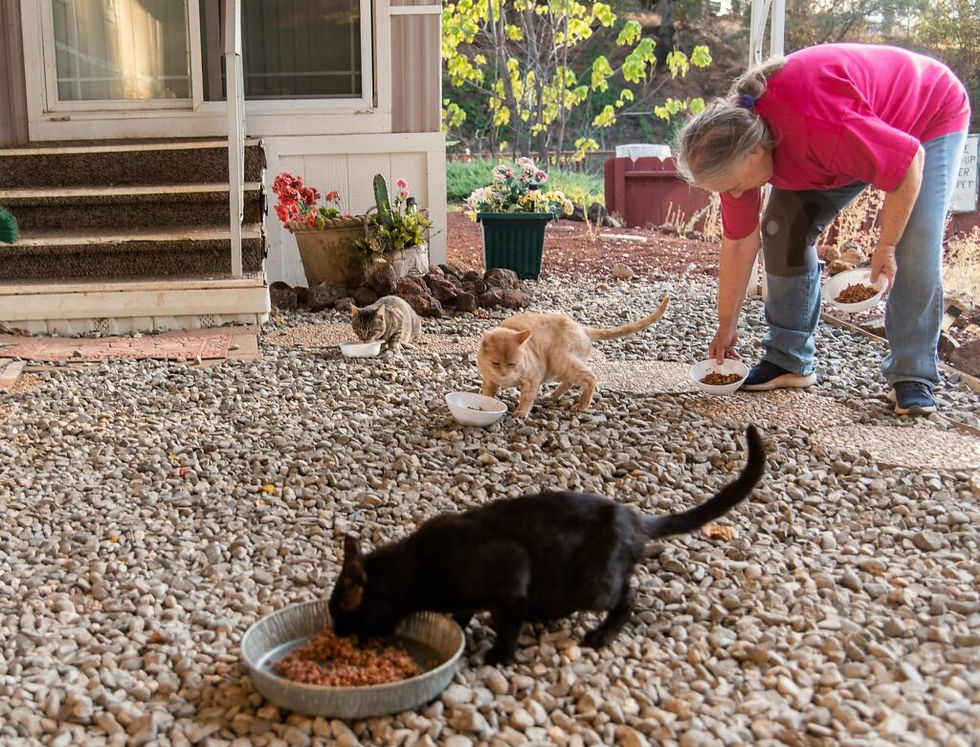
For many Guardians, the calling to feed and protect cats doesn’t stop at the edge of the parking lot.
You see them under cars, behind dumpsters, slipping between trailers and mobile homes—and something in you refuses to pretend they’re invisible.
But in apartments, mobile home parks, and trailer communities, that calling can quickly collide with:
Lease rules
“No feeding” policies
Threats of fines, warnings, or even eviction
Suddenly, a heart-driven act of compassion is treated like a violation.
At Guardians of the Cats, we want you to know:
Guardianship is not a casual act. For many of us, it is a spiritual calling and a faith-based practice—even inside apartments and mobile home communities.
That doesn’t erase lease rules or community agreements. But it does change how you see yourself, how you speak about what you do, and how you ask for respect.
This article is for spiritual support and general education only. It is not legal advice. For specific legal questions, please consider speaking with a local attorney, tenant group, or fair-housing organization.
Why Apartments & Mobile Home Parks Are Different
Unlike private homeowners, residents in these communities usually sign:
Leases (apartments, corporate-owned mobile home parks)
Or community agreements (lot rental, park rules)
These documents often include clauses like:
“No feeding stray animals”
“No outdoor food left for animals”
“No pet-related nuisances or odors”
Managers and owners use these clauses to justify:
Written warnings
Fines or penalties
Non-renewal or eviction threats
So a Guardian who is quietly trying to ease suffering can end up feeling like a criminal for responding to a spiritual pull in their chest.
Your Calling in These Communities
Guardians of the Cats is a faith-based, non-denominational 501(c)(3) ministry.
We commission Guardians who feel a sincere spiritual calling to:
See community cats as souls, not trash or pests
Offer food, care, and protection as an act of compassion and stewardship
Live out their connection to Spirit/the Divine/Love through how they treat the most vulnerable beings around them
When you become a Commissioned Guardian, your work is recognized as part of a faith-based spiritual practice, not “just feeding strays.”
That spiritual framing doesn’t instantly override every lease clause, but it does matter:
In how you explain what you’re doing
In how you write to management
In how outside advocates may view your situation
Apartments: When Management Says “No Feeding”
In apartment communities, management often argues that feeding cats:
Creates “nuisance” (noise, mess, odor)
Attracts wildlife or more unwanted animals
Encourages complaints from other tenants
From their perspective, the easiest answer is:
“Just stop.”
From a Guardian’s perspective, that answer ignores:
The fact that the cats already live there
The suffering that comes from hunger and neglect
The spiritual weight of feeling called to respond
Here’s how we recommend approaching it:
1. Don’t Argue in the Hallway
If a manager confronts you, you don’t have to defend everything on the spot. You can say:
“I hear your concerns. I’m part of a faith-based ministry called Guardians of the Cats. Caring for these cats is part of my spiritual practice. I’d like to follow up in writing so I can explain more clearly and see if we can find a workable solution.”
Then you step away and let a letter do the heavy lifting.
2. Use Calm, Faith-Based Letters
In the Residential & Housing section of the Guardians’ portal, you’ll find letters for:
Apartment managers
Property owners
Complex management companies
These letters:
Explain that you are a Commissioned Guardian
Describe your care as part of a sincere spiritual practice
Emphasize your desire to be clean, discreet, and cooperative
Ask for a reasonable, less restrictive approach (for example: specific feeding times and locations, and a commitment to keep things tidy)
3. Be Honest About Risk
Leases do give management real power.
Even as a faith-based Guardian, there may be situations where:
You need to move feeding off-site to avoid losing your home
You shift to more indoor-based ministry (fostering, advocacy, helping other Guardians)
You begin discerning whether this housing arrangement is compatible with your calling long-term
Your safety and housing stability matter too. You cannot care for anyone if you yourself are unhoused.
Mobile Home & Trailer Communities: A Mixed Landscape
Mobile home communities can be complex because:
Some residents own their homes but rent the lot
Others may be renting both the home and the space
Park managers may have broad rules over outdoor areas
Common themes:
“No feeding animals outside” policies
Pressure to “protect property values”
Complaints from neighbors about cats around trailers
Again, your spiritual practice doesn’t erase park rules—but it changes how you approach the conversation.
If You Own the Home but Rent the Lot
You may have more say over:
What happens on your porch or small yard space
Modest, tidy feeding stations in close proximity to your home
But park rules still apply to:
Common areas
Shared spaces
How visible or disruptive things appear
In these situations, our letters can help you:
Explain that you are part of a faith-based ministry
Clarify that you are feeding cats who already live there, not bringing new ones in
Offer to keep things quiet, clean, and limited in scope
Ask for reasonable boundaries instead of a total ban
What About Legal Protections?
There are broader legal principles (like the First Amendment and fair-housing concepts about religious practice and reasonable accommodations) that may, in some situations, support a more balanced approach.
However:
Laws like RLUIPA are usually applied in specific land-use and institutional contexts, not automatically to every apartment dispute.
Tenant and fair-housing protections vary by state and situation.
It is important not to overpromise what any one law can do.
What we can say is:
Your spiritual practice is not irrelevant
Housing providers are often encouraged to seek reasonable, less restrictive solutions when sincere faith is involved
It is wise to speak with a local attorney or tenant/fair-housing group if your situation becomes serious (eviction threats, discrimination, or harassment)
As a ministry, we focus on spiritual framing, communication tools, and emotional support, and we encourage Guardians to seek local legal help when needed.
How Guardians of the Cats Can Help in These Communities
When you’re in apartments or mobile home parks and the pressure is on, GOTC can support you in several ways:
1. Faith-Based Letters & Language
We provide template letters that you can adapt to your situation, including:
Apartment manager accommodation requests
Park manager / community owner letters
Escalation letters when harassment or threats continue
These letters:
Identify you as a Commissioned Guardian in a faith-based, non-denominational ministry
Describe your care for cats as a sincere spiritual practice, not a casual habit
Emphasize your commitment to cooperation, cleanliness, and respect
Ask for reasonable, realistic options instead of immediate punishment
2. Practical Guidance
We offer guidance on things like:
Choosing discreet, low-impact feeding locations
Keeping feeding times and areas tidy and limited
Avoiding conflict-heavy times and spots (like high-traffic doorways)
Small adjustments can sometimes greatly reduce complaints.
3. Documentation & Emotional Support
We encourage you to:
Document warnings, notices, and interactions (our incident report template can help)
Stay as calm and respectful as possible, even when management is not
Reach out for spiritual support, blessing circles, and encouragement when you feel like you’re being pushed to choose between your calling and your home
4. Referrals for Legal Help
If your situation escalates into:
Eviction threats
Repeated harassment
Possible discrimination
…we may encourage you to contact:
Local tenant unions or legal aid
Fair-housing organizations
Attorneys who understand housing and civil rights in your area
We cannot act as your lawyers, but we can help you show up with clearer language and documentation.
You Are Not a Lease Violation
If you’re reading this because you’ve been warned, fined, or threatened for feeding cats where you live, please hear this:
You are not wrong for caring.
You are not weak for feeling afraid of losing your home.
You are a soul who answered a call to help beings most people overlook.
There may be hard decisions ahead. You may need to adjust how and where you practice your ministry.
But none of that changes the truth of your calling.
A Blessing for Guardians in Apartments & Parks
May you feel seen in the tight spaces where your lease and your heart collide. May you be given wise words, gentle courage, and unexpected allies.May your care for these cats be guided by both compassion and discernment, so that you remain safe, housed, and able to keep showing up.And when you feel alone in stairwells, parking lots, and trailer rows, may you remember that Spirit walks with you—and so do your fellow Guardians.
You should never have to choose between a roof over your head and the tenderness in your heart. When that tension arises, Guardians of the Cats is here to help you hold both with as much grace as possible.


Comments