
When HOAs Say No: Guardianship, Private Property & Your Spiritual Practice
- Guardians of the Cats
- Oct 25, 2025
- 6 min read
Updated: Apr 21

For many Guardians, the hardest part of caring for cats isn’t trapping, feeding, or vetting.
It’s people.
One of the most common sources of conflict is Homeowners’ Associations (HOAs) that try to forbid feeding or caring for cats in their communities. Letters, fines, and angry emails can leave you feeling isolated, shamed, or even threatened.
At Guardians of the Cats, we want you to remember:
If you are a Commissioned Guardian, your work is not a casual hobby. It is part of your sincere spiritual practice as a member of a faith-based, non-denominational ministry.
That doesn’t mean HOAs never have authority. But it does mean you don’t have to approach them as “just a cat person” with no standing or language to explain what you do.
This article is for spiritual support and general education only. It is not legal advice. For specific legal questions, consider speaking with a local attorney or fair-housing organization.
Private vs Shared Property: Why It Matters
When it comes to HOAs, where you are caring for cats makes a big difference.
1. On Someone Else’s Property (Without Permission)
If you are feeding or caring for cats:
On a neighbor’s lot
In an area owned by another resident
Or on land clearly not yours and not common HOA property
…your position is weaker. The owner generally has the right to say what happens on their property.
In these situations, your role as a Guardian is to:
Be respectful
Avoid arguments and confrontations
Move feeding stations to a place where you either have permission or are on your own property
Our template letters can still help if the other person becomes harassing or threatening—but sometimes the most sustainable solution is simply changing locations.
2. On Your Own Property (When You Rent)
If you rent in an HOA community, there are three layers to consider:
Your lease (landlord’s rules)
The HOA rules (CC&Rs)
Your spiritual practice as a Guardian
Many leases restrict feeding or sheltering animals outside. In those cases, your ministry may need to be practiced more quietly and creatively:
Indoor care and fostering
Advocacy, education, and support work
Carefully worded letters to landlords asking for reasonable, faith-based accommodations where possible
Our Residential & Housing letters are designed to help you communicate respectfully, explain that you are part of a faith-based, non-denominational 501(c)(3) ministry, and request modest, reasonable ways to continue your practice without putting your housing at risk.
3. On Your Own Property (When You Own Your Home)
If you own your home within an HOA, your position is usually the strongest.
Caring for cats:
In your yard
On your porch or patio
Within fenced areas
…can be understood as part of your household life and spiritual practice, especially when:
You keep things orderly and discreet
You are not creating clear, documented nuisance conditions
You are willing to cooperate around health and sanitation concerns
In these situations, HOAs may have far less power to interfere with what you do inside your own boundary lines, particularly when it is a sincere faith-based practice and not a public spectacle.
Our letters for HOAs and property managers help you frame your care as:
A spiritual calling
Part of a recognized ministry
A practice you are willing to carry out responsibly and respectfully
When You Own Your Home but the HOA Objects
Even as a homeowner, HOAs still govern:
Common areas
Certain exterior standards
Rules in the CC&Rs (Covenants, Conditions & Restrictions)
So how do you navigate that tension?
Inside Your Property Lines
On your own lot—your yard, porch, patio, fenced-in areas—you generally have the strongest claim to:
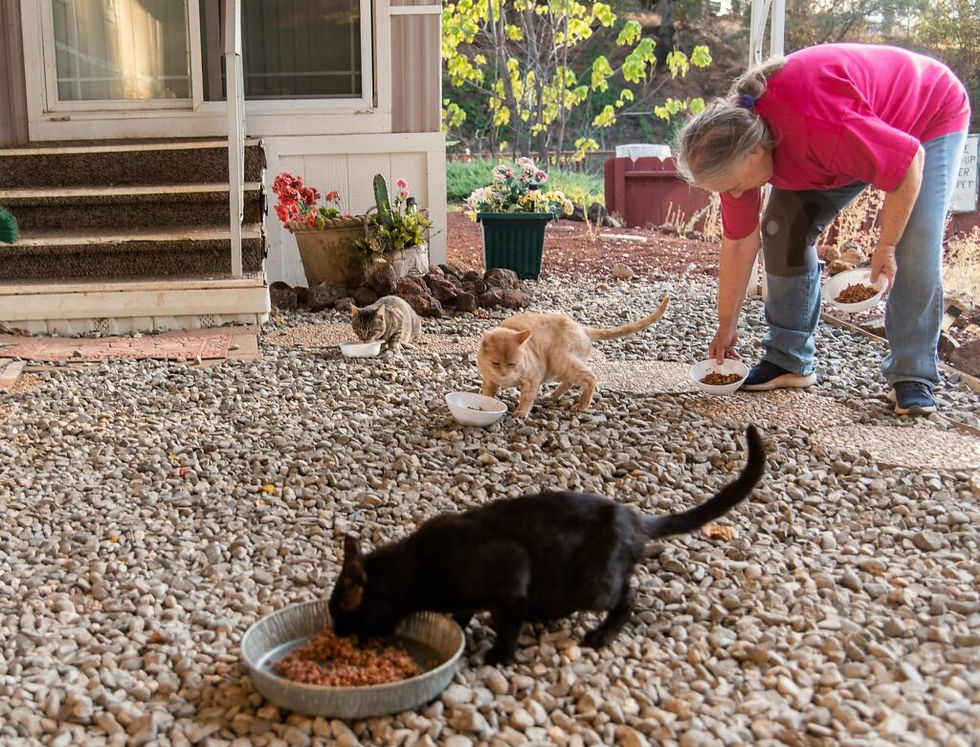
Feed and care for cats who come to your property
Set up modest, tidy feeding stations or shelters
Treat that care as an expression of your faith and spiritual practice
When an HOA says “you are not allowed to feed cats anywhere, including on your own property,” that may raise questions under broader constitutional and fair-housing principles that encourage less restrictive approaches to sincere spiritual practices.
We do not claim that any specific law automatically forces an HOA to agree with you. But we do encourage HOAs to consider:
Whether there is a reasonable compromise
Whether a total ban on quiet, responsible care inside your own yard is truly necessary
Our letters are written to invite conversation and accommodation, not war.
In Common and Shared Areas
In greenbelts, sidewalks, community lots, and shared spaces, HOAs generally have much more authority to:
Regulate feeding
Set rules about animals, food, and congregating cats
Ask you to relocate any feeding stations
In those spaces, your protections are weaker, and the safer spiritual practice is often to:
Move feeding to your own property whenever possible
Use your Proactive Community Outreach letters to explain what you’re doing if needed
Avoid confrontations in common areas and let your written communication speak for you
Where Laws Like RLUIPA Fit (Carefully)
You may sometimes hear RLUIPA (the Religious Land Use and Institutionalized Persons Act) mentioned in connection with faith-based land use. In general, it’s a federal law that encourages governments and certain decision-makers to avoid placing substantial burdens on sincere religious exercise through land-use regulations.
For individual Guardians, this does not automatically mean:
“The HOA must let me do whatever I want,” or
“I can threaten legal action and win every time.”
What it can mean in some contexts is:
Your faith-based perspective is not irrelevant
There is an expectation that decision-makers look for reasonable, less restrictive ways to address concerns when faith is sincerely involved
Because these questions can be complex and vary by state and situation, we always recommend:
Starting with education, respect, and calm letters
Seeking local legal or fair-housing advice if you ever reach a serious conflict
How Guardians of the Cats Supports You With HOAs
As a ministry, we cannot promise specific outcomes with any HOA—but we can equip you.
1. Official Faith-Based Letters
We offer template letters you can personalize and send to:
HOA boards
Property managers
Neighboring homeowners
These letters:
Explain that you are a Commissioned Guardian in a faith-based, non-denominational 501(c)(3) ministry
Describe your care for cats as part of your sincere spiritual practice
Emphasize your commitment to cleanliness, respect, and cooperation
Ask for reasonable accommodations, especially on your own property
2. Clarity on Where Your Rights Are Strongest
Our blogs, letters, and member resources help you understand:
Where your spiritual practice is most protected (usually your own lot as an owner)
Where HOAs have stronger authority (common areas, shared spaces)
When it may be wiser to move feeding stations rather than fight over them
3. Documentation and Escalation Support
If harassment becomes severe or threatening, we encourage you to:
Use our Harassment & Threats Incident Report to document everything
Stay calm and avoid on-the-spot confrontations
Consider contacting local legal or fair-housing resources with your documentation in hand
We can offer spiritual and emotional support, but any legal evaluation needs to come from someone licensed in your area.
4. Fellowship and Spiritual Support
You are not the only person who has been called names, threatened with fines, or made to feel crazy for caring.
As a Guardian, you are:
Part of a spiritual fellowship
Supported through blessing circles, guided intentions, and encouragement
Reminded that your calling is valid, even when others don’t understand
Bottom Line for Guardians in HOA Communities
If you’re caring for cats inside your own property lines as a homeowner, your position is usually the strongest.
If your HOA objects, GOTC letters can help you explain your spiritual practice, request reasonable accommodations, and propose respectful boundaries.
In common areas and shared spaces, protections are weaker, and you may need to adjust where and how you feed.
Through it all, you remain a Guardian—your calling is not defined by any one board’s opinion of you.
A Blessing for Guardians Facing HOAs
May you remember that your compassion is not a violation, but a response to suffering that many hearts overlook. May you speak with clarity, patience, and quiet strength when rules and regulations press against your calling. May you find allies, openings, and wise compromises, and may your home be a place where both you and the cats you care for can dwell in as much peace as this world allows.
If you’re currently facing HOA pushback, you are not alone. We see you. We stand with you. And we are here to help you put your spiritual practice into words.

Comments